

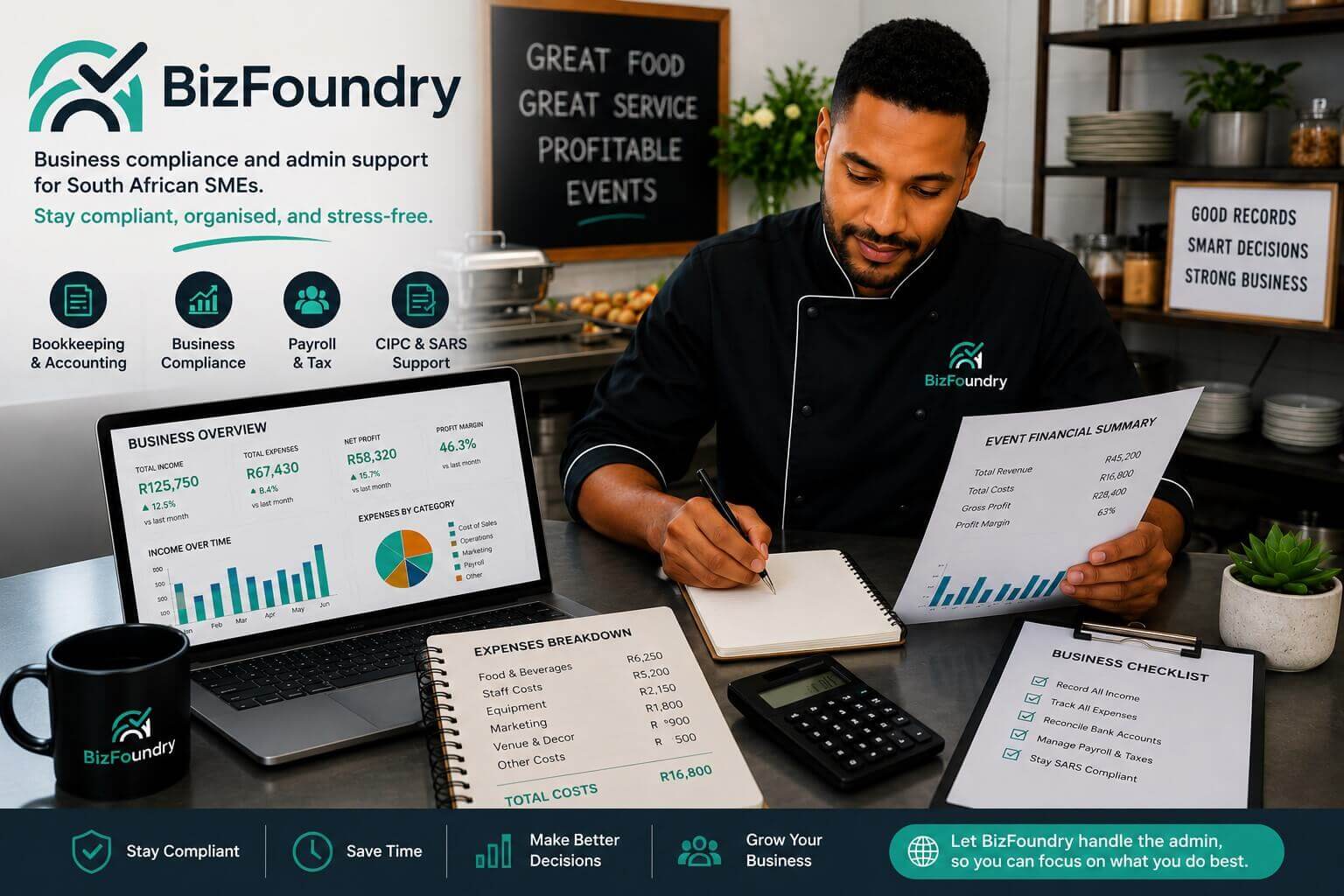
Sipho runs a small catering business in Johannesburg that grew from serving family braais to handling corporate events and weddings. Despite the busy bookings and endless WhatsApp orders, he never really knew if each event was making or losing money. Expenses piled up — petrol slips, supplier bills, extra helpers — but the profits felt uncertain.
Like many South African SMEs, Sipho’s approach to money management was simple and manual. His ‘books’ were a mix of notebooks, bank SMSes, and WhatsApp invoices. This informal method made it tough to track event costs accurately or calculate his margins. Without clear bookkeeping, Sipho couldn’t really tell if he was earning enough to cover the growing demands of his business.
Why Traditional Record-Keeping Didn’t Cut It
Sipho’s story is familiar to many small business owners in South Africa. Juggling suppliers, staff wages, and fluctuating customer orders, the paperwork soon becomes overwhelming. Relying on manual records or sporadic notes on WhatsApp was time-consuming and prone to error.
Without a proper system, Sipho couldn’t easily see which events covered costs or generated profit. He sometimes underquoted because he wasn’t sure of his real expenses — risking losses. Other times, he overcharged, losing competitive edge. The lack of clarity also made it difficult to prepare for SARS VAT or CIPC annual return deadlines, adding stress to month-end.
How MiBooks Helped Simplify Bookkeeping
Sipho heard about MiBooks, BizFoundry’s easy accounting app designed for South African SMEs like his. It promised simple on-the-go invoicing, expense capture, and clear reports without needing an accounting degree. Intrigued by the R500/month bookkeeping service from BizFoundry, he decided to give it a try.
With MiBooks, Sipho could create quotes and invoices from his phone while on site, snap photos of supplier bills, and track payments in one place. The app’s dashboards gave him a clear overview of his cash flow and profitability per event. Suddenly, the numbers made sense: which events were profitable, which weren’t, and where costs were creeping up.
Tracking Costs to See Real Profit
The key change was how Sipho started tracking every expense linked to a particular event. From petrol for delivering platters to payments for an extra chef, everything was logged under the event’s name. This detailed approach revealed patterns — like certain suppliers charging more or some events requiring extra staff.
Being able to compare income against actual costs helped Sipho adjust his pricing realistically. He stopped underquoting and began planning better for busy weekends. The transparency also made it easier when preparing SARS VAT returns or submitting CIPC annual returns, as all records were organised and accessible.
What Other South African SMEs Can Learn
Sipho’s experience shows how practical bookkeeping tailored for local SMEs can make a huge difference. Using tools like MiBooks and tapping into BizFoundry support means you don’t have to be an expert to manage your finances well.
Whether you run a catering business, a salon, or a market stall, tracking costs carefully and staying on top of administrative tasks like VAT registration or annual returns helps you avoid surprises. If your taxable supplies have crossed R120,000 recently, it might be worth checking if SARS VAT registration applies to you within 21 business days.
Sample Event Cost Tracking for Sipho’s Catering Business
| Cost Item | Amount (ZAR) | Linked Event |
|---|---|---|
| Supplier meat order | 2,500 | Johannesburg Corporate Event |
| Petrol for delivery | 350 | Johannesburg Corporate Event |
| Temporary kitchen assistant | 1,200 | Johannesburg Corporate Event |
| Venue rental deposit | 1,000 | Wedding at Soweto |
| Ingredient purchase | 3,000 | Wedding at Soweto |
| Transport costs | 400 | Wedding at Soweto |
| Cleaning services | 600 | Wedding at Soweto |
| Marketing flyers | 450 | General Business Expense |
Frequently Asked Questions
How can I keep track of my catering event expenses on the go?
Using an app like MiBooks lets you quickly capture expenses, create invoices, and track payments from your phone, making on-the-go bookkeeping easier.
When should I consider registering for VAT as a small catering business in SA?
If your taxable supplies exceed or are likely to exceed R2.3 million in 12 months, VAT registration is compulsory. Voluntary registration may apply if your turnover is above R120,000. Check with BizFoundry or a qualified adviser for your specific situation.
How does proper bookkeeping help with CIPC annual returns?
Having organised financial records makes it easier to file accurate annual returns with CIPC on time, avoiding penalties.